
OEM vs. Private Label: What’s the Difference?
When launching a new product line in the intimate wellness space, one of the most critical decisions you’ll make is choosing your manufacturing model. The terms OEM (Original Equipment Manufacturer) and Private Label are often used, but they represent fundamentally different approaches to product development and branding. Understanding the distinction between OEM vs. ODM (Original Design Manufacturer) vs. Private Label is essential for any entrepreneur looking to create a line of OEM adult products or private label intimate products.
This guide will demystify these manufacturing models, helping you choose the path that best aligns with your business goals, budget, and brand vision.
Defining the Terms: OEM vs. ODM vs. Private Label
Let’s start with clear definitions, as these terms form the foundation of your sourcing strategy.
Private Label: Your Brand on a Proven Product
Private Label is the most straightforward and popular entry point for new brands. In this model, a manufacturer produces a line of market-tested, pre-formulated products that multiple brands can then purchase and sell under their own name.
- How it works: You select a product from a manufacturer’s existing catalog (e.g., a specific water-based lubricant formula). You then design your own branding—logo, packaging, and label—which is applied to this generic product.
- Key Characteristic: You are not creating a new product; you are branding an existing one.
OEM (Original Equipment Manufacturer): Your Unique Product, Made by a Partner
OEM manufacturing is a more collaborative and customized process. In this model, you (the brand) have a unique product design or formula, and you hire a factory to produce it for you according to your exact specifications.
- How it works: You provide the manufacturer with a detailed blueprint, formula, or design for a product that is exclusively yours. The factory acts as your production arm, bringing your vision to life.
- Key Characteristic: The product is your intellectual property. The manufacturer builds your product.
ODM (Original Design Manufacturer): A Hybrid Approach
ODM sits between Private Label and OEM. An ODM manufacturer has existing product designs and molds that can be customized to a certain degree. It’s like starting with a template that you can then modify.
- How it works: You choose a base model from the ODM’s portfolio and then request modifications—such as changing the color, materials, or adding a specific feature. The final product is a variation of the manufacturer’s original design.
- Key Characteristic: It offers more customization than Private Label but less than full OEM. It’s a collaborative design process based on an existing foundation.
Comparison Table: OEM vs. Private Label vs. ODM
| Feature | Private Label | OEM (Original Equipment Manufacturer) | ODM (Original Design Manufacturer) |
|---|---|---|---|
| Product Concept | Manufacturer’s existing formula/product | Your unique, custom formula/design | Manufacturer’s base design with your modifications |
| Intellectual Property (IP) | Belongs to the manufacturer | Belongs to you (the brand) | Typically shared or belongs to the manufacturer |
| Upfront Investment | Low (no R&D or tooling costs) | High (R&D, tooling, and mold costs) | Moderate (some customization costs) |
| Time to Market | Fast (weeks) | Slow (months or even years) | Moderate (faster than OEM) |
| Minimum Order Quantity (MOQ) | Low | High | Moderate to High |
| Differentiation | Low (only branding is unique) | High (product is completely unique) | Moderate (product has some unique features) |
| Best For | New brands, fast market entry, testing ideas | Established brands, unique innovations, high-volume products | Brands wanting more than just a label, but without a full R&D budget |
When to Choose Private Label
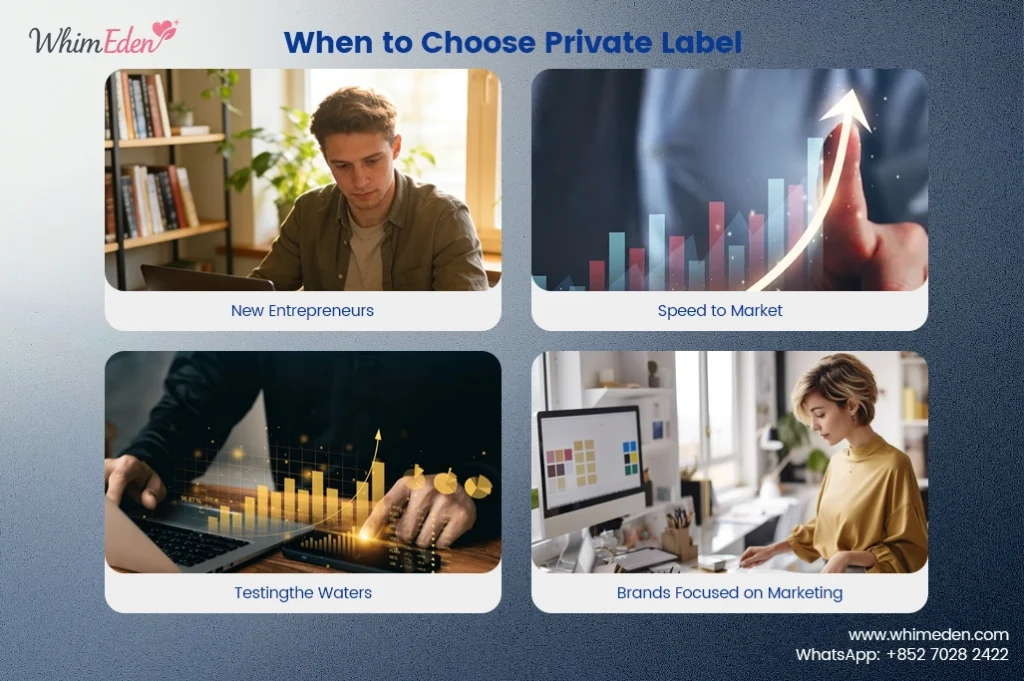
Opting for private label intimate products is the ideal strategy for:
- New Entrepreneurs: It dramatically lowers the barrier to entry. You can launch a brand without a massive upfront investment in research and development.
- Speed to Market: If you want to capitalize on a trend quickly, private labeling allows you to go from concept to launch in a matter of weeks.
- Testing the Waters: Private label is perfect for testing a new product idea or market segment without committing to large inventory volumes.
- Brands Focused on Marketing: If your core strength is marketing and brand building, not product development, private label lets you focus on what you do best.
For example, if you want to start a private label lubricant brand, you can partner with a reputable lubricant manufacturer, choose from their selection of high-quality, pre-approved formulas (water-based, silicone-based, etc.), and launch your branded line quickly and efficiently.
When to Choose OEM
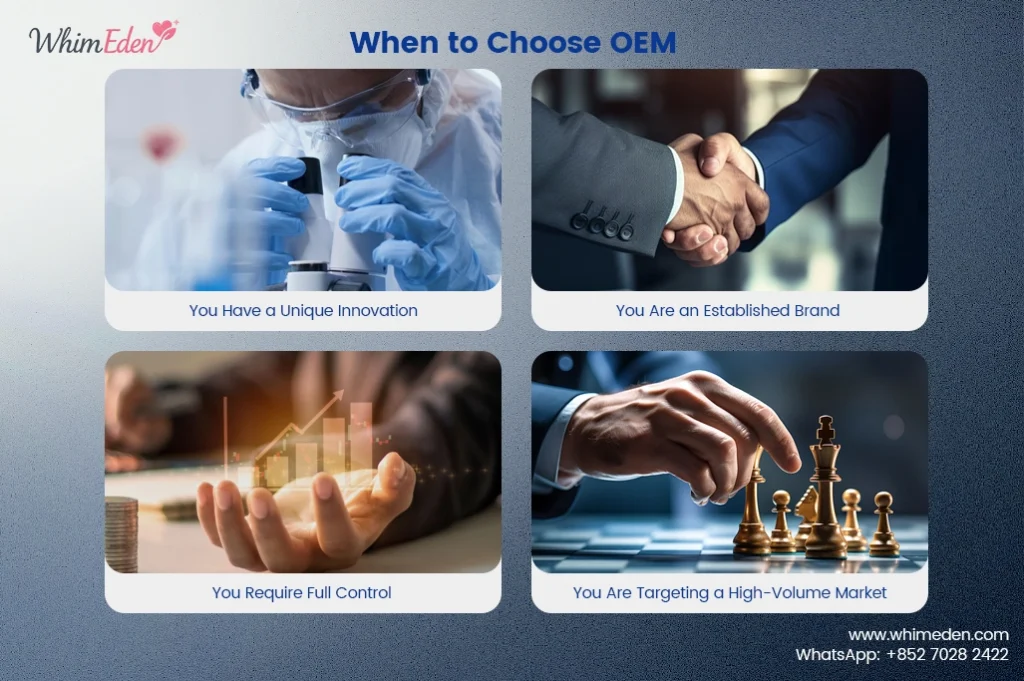
Choosing OEM manufacturing is the right move when:
- You Have a Unique Innovation: If you have developed a proprietary formula for a lubricant or a unique design for a pleasure device, OEM is the only way to protect your intellectual property and bring your exclusive product to market.
- You Are an Established Brand: Larger brands with significant resources often use OEM to create flagship products that differentiate them from the competition.
- You Require Full Control: OEM gives you complete control over every aspect of the product, from the raw materials to the final specifications.
- You Are Targeting a High-Volume Market: The high upfront costs of OEM are often justified by the economies of scale achieved with large production runs.
Making the Right Choice for Your Intimate Wellness Brand
For most new brands entering the adult product business, the strategic choice is clear: start with Private Label. It provides the fastest, most cost-effective, and lowest-risk path to market. It allows you to establish your brand, build a customer base, and generate revenue.
As your brand grows and you gather more data about your customers’ preferences, you can then explore ODM or full OEM to develop exclusive products. This phased approach allows you to scale your business intelligently.
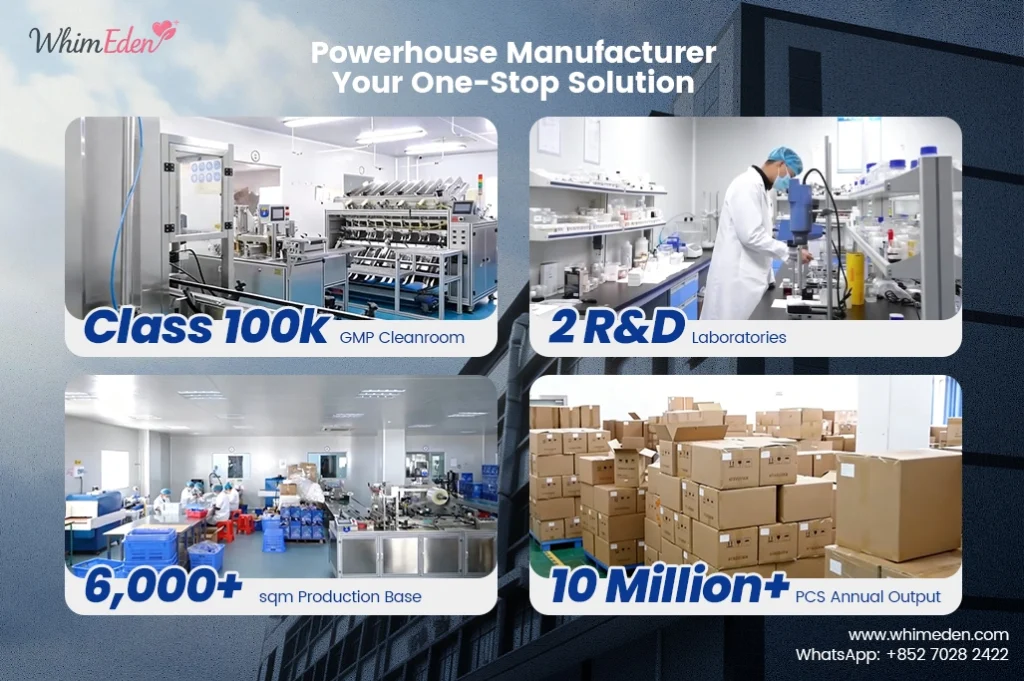
No matter which model you choose, the key to success is finding the right manufacturing partner. Look for an intimate product manufacturer or OEM lubricant manufacturer with a proven track record, a commitment to quality, and the flexibility to support your brand as it grows. They should be able to provide you with not only high-quality products but also expert guidance on formulation, packaging, and navigating the regulatory landscape.
By understanding the fundamental differences between OEM and Private Label, you can make an informed decision that sets your brand up for long-term success in the exciting and dynamic world of intimate wellness.
Ready to build your brand ?
Contact us today to learn more about our manufacturing services and how we can help you achieve your vision.
- Email: info@whimeden.com
- Phone / WhatsApp: +852 7028 2422
- Follow us on Social Media: Facebook, Instagram, YouTube
